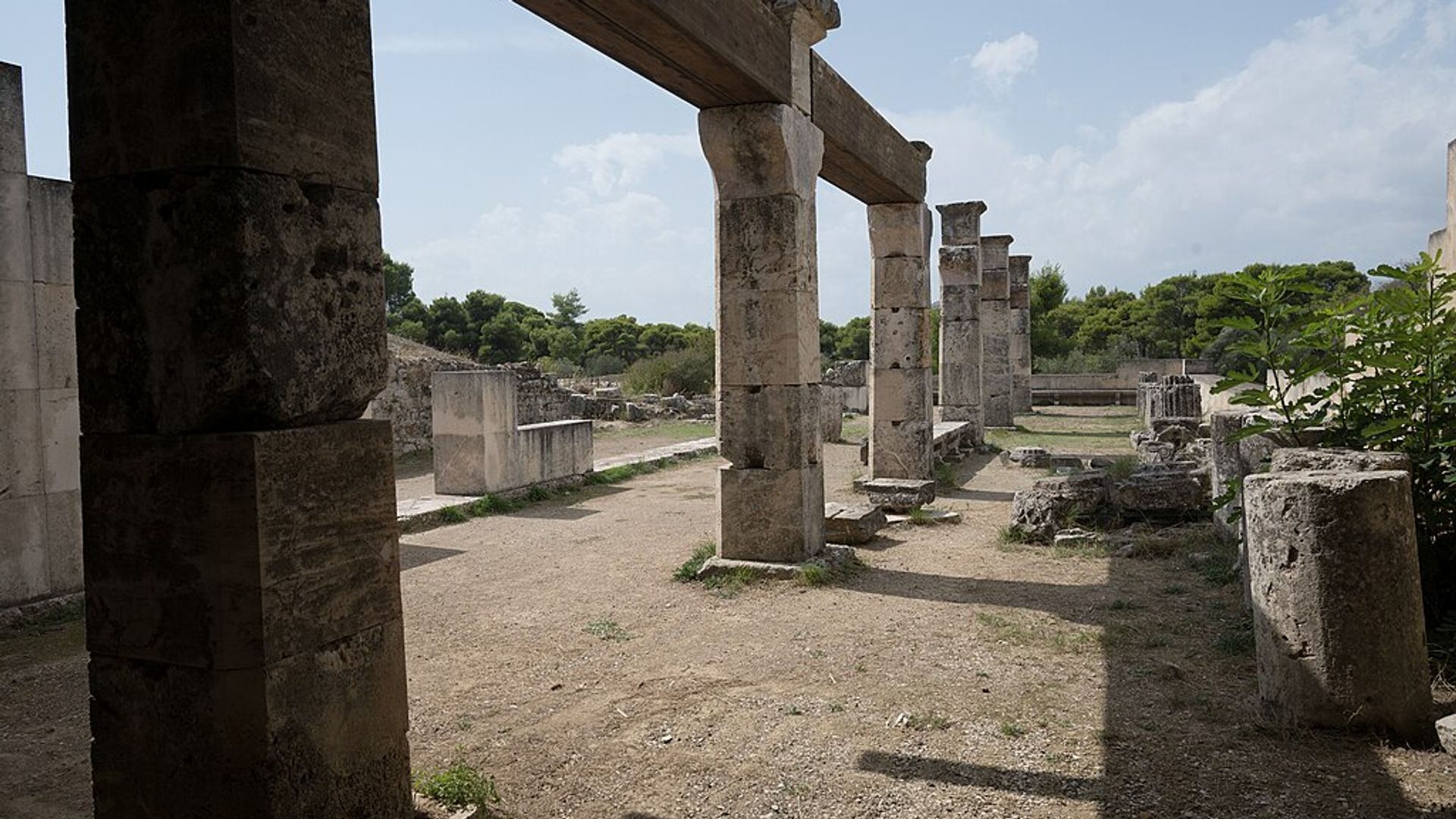
Discover Epidaurus, home to the world's best-preserved ancient theater with perfect acoustics and the legendary healing sanctuary of Asclepius. Experience where ancient Greeks sought miraculous cures and theatrical performances still echo through millennia.
Standing in the center of the ancient theater at Epidaurus, you can drop a coin and hear it clink from the highest row, 55 meters away. This architectural marvel, built 2,400 years ago, represents the pinnacle of ancient Greek engineering and continues to host performances that captivate audiences just as they did in antiquity.
Epidaurus wasn't just about entertainment—it was the ancient world's most famous healing center, where pilgrims traveled from across the Mediterranean seeking cures from the god Asclepius. Today, this UNESCO World Heritage Site offers visitors a rare glimpse into ancient Greek medicine, spirituality, and cultural life, all set against the stunning backdrop of the Peloponnese countryside.
The Ancient Theater of Epidaurus: Acoustic Perfection
The theater of Epidaurus stands as the crown jewel of ancient Greek architecture, renowned worldwide for its extraordinary acoustics and timeless beauty. Designed by architect Polykleitos the Younger in the 4th century BC, this magnificent structure could accommodate up to 14,000 spectators across 55 tiers of limestone seats.
What makes this theater truly exceptional is its acoustic engineering—a mystery that continues to fascinate scientists today. Even a whisper from the circular orchestra can be heard clearly in the back row, a phenomenon attributed to the theater's precise geometric design and the limestone's sound-filtering properties.
The theater's symmetry follows the golden ratio, creating visual harmony that pleases the eye as much as the acoustics delight the ear. Every summer, the Epidaurus Festival brings ancient Greek dramas to life, allowing visitors to experience performances exactly as audiences did 2,400 years ago.
Architectural Features:
- 55 rows of seats divided into two sections by a horizontal walkway
- Orchestra circle measuring 20 meters in diameter with central altar
- Original seating capacity of 14,000 spectators
- Perfectly preserved condition with 34 rows from original construction
- Stage building (skene) foundations visible behind orchestra
- Symmetrical design following precise mathematical proportions
The Sanctuary of Asclepius: Ancient Healing Center
Before Epidaurus became famous for its theater, it was revered as the most important healing sanctuary in the ancient Greek world. The cult of Asclepius, god of medicine, attracted thousands of pilgrims seeking cures for ailments ranging from chronic diseases to infertility.
The sanctuary functioned as a holistic healing center, combining religious ritual, therapeutic treatments, and psychological care. Patients would undergo purification rituals, offer sacrifices, and spend the night in the enkoimeterion (sleeping hall), hoping for a healing dream or divine visitation from Asclepius.
Archaeological evidence reveals sophisticated medical practices, including surgical instruments, pharmaceutical preparations, and detailed patient records inscribed on stone tablets. The Asclepieion of Epidaurus represents the birthplace of modern medicine, where empirical observation began replacing purely supernatural explanations for disease.
Key Sanctuary Buildings:
- Temple of Asclepius with chryselephantine statue by Thrasymedes
- Tholos (round building) with mysterious underground labyrinth
- Enkoimeterion where patients slept awaiting divine dreams
- Abaton (sacred dormitory) for incubation rituals
- Katagogion (guest house) accommodating 160 visitors
- Stadium for athletic competitions honoring Asclepius
- Gymnasium and palaestra for physical therapy exercises
What to See at the Archaeological Site
The archaeological site of Epidaurus extends far beyond the famous theater, covering approximately 370 acres of sacred and civic buildings. A complete visit requires several hours to fully appreciate the sanctuary's scope and significance.
The site museum houses extraordinary artifacts including surgical instruments, votive offerings, and inscribed stelae describing miraculous cures. These testimonials provide fascinating insights into ancient medical practices and patient experiences at the sanctuary.
Walking through the ruins, you'll discover the foundations of numerous buildings that supported the sanctuary's operations as both healing center and religious complex. The peaceful setting among pine-covered hills creates an atmosphere conducive to contemplation and healing, much as it did in ancient times.
Must-See Highlights:
- Ancient Theater with acoustic demonstration from orchestra
- Archaeological Museum displaying medical instruments and votive offerings
- Tholos foundations with intricate floor patterns
- Temple of Asclepius remains and altar
- Stadium track measuring 181.30 meters
- Katagogion guest house with 160 rooms around four courtyards
- Propylon monumental gateway entrance
- Sacred spring where purification rituals occurred
Quick Facts About Epidaurus
Essential Information:
- Location: Argolid Peninsula, northeastern Peloponnese
- Distance from Nafplio: 30 kilometers (35-minute drive)
- Distance from Athens: 150 kilometers (2-hour drive)
- UNESCO Status: World Heritage Site since 1988
- Theater Construction: 4th century BC (circa 340-330 BC)
- Architect: Polykleitos the Younger
- Seating Capacity: 14,000 spectators
- Acoustics Range: Sound carries 55 meters perfectly
- Festival Season: June through August annually
- Site Opening Hours: 8:00 AM to 8:00 PM (summer), 8:00 AM to 5:00 PM (winter)
Planning Your Visit to Epidaurus
Timing your visit strategically enhances your experience at this ancient site significantly. Early morning arrivals offer cooler temperatures, fewer crowds, and the best lighting for photography across the theater's golden limestone.
The site becomes crowded during festival performance days, particularly in July and August when tourists flock to see ancient dramas under the stars. If you're not attending a performance, consider visiting on non-festival days for a more contemplative experience.
Combining Epidaurus with nearby attractions creates a comprehensive historical tour of the Peloponnese. The archaeological sites of Mycenae, Tiryns, and Ancient Corinth lie within easy driving distance, making multi-site itineraries highly rewarding.
Best Times to Visit:
- Early morning (8:00-10:00 AM) for solitude and cool temperatures
- Late afternoon (4:00-6:00 PM) for golden hour photography
- Spring (April-May) for wildflowers and moderate weather
- Autumn (September-October) for pleasant temperatures and fewer tourists
- Festival evenings for authentic ancient drama performances
- Winter months for budget travelers willing to brave cooler weather
Getting to Epidaurus from Major Cities
Reaching Epidaurus requires some planning, as public transportation options remain limited compared to major archaeological sites. The most convenient base for visiting is Nafplio, a charming Venetian town just 30 kilometers away that offers excellent accommodations and dining.
From Athens, driving via the coastal road through the Saronic Gulf provides scenic views and takes approximately two hours. Alternatively, KTEL buses run from Athens to Epidaurus, though schedules are infrequent and require careful coordination.
Many travelers opt for organized tours that combine Epidaurus with Mycenae and Nafplio in a single day trip. Book our Nafplio, Mycenae, and Epidaurus tour for hassle-free exploration with expert guides who bring ancient history to life.
Transportation Options:
- Rental Car: Most flexible option, allows multi-site visits
- Organized Tour: Convenient from Athens or Nafplio with guide
- KTEL Bus: Budget option from Athens (limited schedule)
- Taxi: Expensive but convenient from Nafplio
- Private Transfer: Comfortable for groups or families
- Bicycle: Adventurous option from Nafplio (hilly terrain)
The Epidaurus Festival Experience
Attending a performance at the ancient theater ranks among Greece's most magical cultural experiences. The Epidaurus Festival, running since 1955, presents classical Greek tragedies and comedies by Sophocles, Euripides, Aeschylus, and Aristophanes in their original setting.
Performances begin at sunset, as the golden light fades and stars emerge above the ancient stage. The theater's perfect acoustics mean no microphones are needed—actors' voices carry naturally to every seat, just as they did 2,400 years ago.
Tickets range from €15 to €50 depending on seating section, with the best views from the central lower sections. Arrive early to explore the site before the performance and bring cushions, as the stone seats grow uncomfortable during three-hour productions.
Festival Attendance Tips:
- Book tickets online months in advance for popular performances
- Bring seat cushions or rent them at the entrance
- Wear layers as temperatures drop significantly after sunset
- Arrive 90 minutes early to explore site before performance
- Consider renting translation headsets for non-Greek speakers
- Pack light snacks and water (no food sold inside)
- Use restrooms before entering theater (limited facilities)
Combining Epidaurus with Nearby Attractions
The Argolid region surrounding Epidaurus contains an extraordinary concentration of archaeological treasures. Creating a multi-day itinerary allows you to explore the interconnected history of Mycenaean civilization, Classical Greece, and Byzantine heritage.
The archaeological site of Mycenae lies just 40 kilometers from Epidaurus, offering dramatic Bronze Age ruins including the famous Lion Gate and Treasury of Atreus. Ancient Corinth, with its imposing acropolis and Roman ruins, sits another hour northwest.
Basing yourself in Nafplio provides the perfect headquarters for regional exploration. This beautiful Venetian port town offers excellent restaurants, charming accommodations, and its own historical attractions including Palamidi Fortress and Bourtzi Castle.
Recommended Itinerary:
- Day 1: Nafplio city tour, Palamidi Fortress, waterfront dining
- Day 2: Morning at Epidaurus, afternoon at Mycenae
- Day 3: Ancient Corinth and Acrocorinth fortress
- Day 4: Ancient Argos and local wineries
- Day 5: Beach relaxation or Sparta and Mystras excursion
Travel Tips for Visiting Epidaurus
Preparing properly for your visit ensures maximum enjoyment of this remarkable archaeological site. The terrain includes uneven ancient pathways, steep theater steps, and exposed areas with limited shade.
Summer temperatures regularly exceed 35°C (95°F), making sun protection and hydration absolutely essential. The site offers minimal shade, so plan accordingly with hats, sunscreen, and plenty of water.
Wear sturdy walking shoes with good grip, as the polished limestone theater steps can be slippery. Climbing to the top row rewards you with spectacular views but requires navigating steep, narrow stairs.
Essential Packing List:
- Comfortable walking shoes with ankle support and grip
- Wide-brimmed hat and high-SPF sunscreen
- Minimum 1.5 liters of water per person
- Light, breathable clothing in neutral colors
- Camera with telephoto lens for architectural details
- Binoculars for viewing distant sanctuary buildings
- Portable phone charger for navigation and photos
- Small backpack for carrying essentials
- Cash for entrance fees and museum shop
Understanding Ancient Greek Medicine at Epidaurus
The sanctuary of Asclepius at Epidaurus represents a pivotal moment in medical history when empirical observation began supplementing religious healing practices. Priests at the sanctuary, known as Asclepiads, maintained detailed records of treatments and outcomes, forming the basis of clinical observation.
The healing process combined spiritual, psychological, and physical elements. Patients underwent ritual purification, offered sacrifices, and participated in therapeutic activities including bathing, exercise, and dietary modifications.
The practice of enkoimesis (temple sleep) involved patients sleeping in sacred dormitories, awaiting healing dreams or visitations from Asclepius. Upon waking, priests would interpret dreams and prescribe treatments ranging from herbal remedies to surgical procedures.
Ancient Healing Methods:
- Hydrotherapy using sacred spring waters
- Pharmaceutical preparations from herbs and minerals
- Surgical interventions for injuries and tumors
- Dietary modifications and fasting protocols
- Physical therapy through gymnasium exercises
- Psychological counseling through dream interpretation
- Snake therapy (sacred serpents of Asclepius)
- Music and theater as therapeutic interventions
Photography Tips for Capturing Epidaurus
The ancient theater presents extraordinary photographic opportunities, but capturing its grandeur requires strategic planning. The best light occurs during golden hour—the first hour after sunrise and the last hour before sunset—when warm light bathes the limestone seats.
For dramatic perspective shots, climb to the top row and shoot downward toward the orchestra, emphasizing the theater's perfect symmetry. Conversely, shooting upward from the orchestra circle captures the impressive scale and architectural precision.
The acoustic demonstration makes for compelling photos—capture visitors dropping coins or speaking from the orchestra while others listen from the top rows. These human elements provide scale and context to architectural shots.
Photography Recommendations:
- Wide-angle lens (16-35mm): Captures full theater panoramas
- Standard zoom (24-70mm): Versatile for architectural details
- Telephoto lens (70-200mm): Isolates distant sanctuary ruins
- Polarizing filter: Reduces glare on limestone surfaces
- Tripod: Essential for low-light museum photography
- Drone: Restricted—requires special archaeological site permits
The Mythology Behind Epidaurus
According to Greek mythology, Asclepius was the son of Apollo and the mortal princess Coronis. Raised by the centaur Chiron, Asclepius learned the healing arts and became so skilled he could resurrect the dead.
Zeus, fearing that Asclepius's power disrupted the natural order between mortals and immortals, struck him down with a thunderbolt. Apollo, grieving his son, convinced Zeus to place Asclepius among the stars as the constellation Ophiuchus (the serpent-bearer).
The sanctuary at Epidaurus claimed to be Asclepius's birthplace, though other cities contested this honor. Regardless, Epidaurus became the most important center of his cult, attracting pilgrims from across the Mediterranean world seeking miraculous cures.
Key Mythological Figures:
- Asclepius: God of medicine and healing
- Apollo: Father of Asclepius, god of prophecy and healing
- Coronis: Mortal mother who died during Asclepius's birth
- Chiron: Wise centaur who taught Asclepius healing arts
- Hygieia: Daughter of Asclepius, goddess of health
- Panacea: Daughter of Asclepius, goddess of universal remedy
- Telesphoros: Son of Asclepius, god of convalescence
Practical Visitor Information
The archaeological site and museum operate year-round with seasonal hour variations. Summer hours (April-October) extend to 8:00 PM, while winter closing time moves to 5:00 PM.
Entrance fees include access to both the archaeological site and museum. EU students receive free admission with valid student ID, while seniors over 65 from EU countries receive reduced rates.
The site includes a small café near the entrance offering refreshments, though prices are tourist-oriented. The museum shop stocks excellent archaeology books, replicas, and local products.
Admission Details:
- Full Price Ticket: €12 (April-October), €6 (November-March)
- Reduced Price: €6 for seniors and students with ID
- Free Admission: March 6, April 18, May 18, last weekend of September, October 28, first Sunday November-March
- Combined Ticket: Available with Mycenae and other Argolid sites
- Children Under 18: Free admission with ID
- Photography: Permitted without flash (no tripods without permit)
- Guided Tours: Available in multiple languages by appointment
Where to Stay Near Epidaurus
While Epidaurus village offers limited accommodation options, nearby Nafplio provides superior lodging choices ranging from budget guesthouses to luxury boutique hotels. This charming Venetian town sits just 30 kilometers away and serves as the ideal base for exploring the Argolid region.
For those seeking wellness experiences, the Euphoria Retreat near Mystras offers luxurious spa treatments inspired by ancient Greek healing traditions. Though farther afield, it provides a modern interpretation of the holistic healing philosophy practiced at ancient Epidaurus.
Alternatively, Porto Heli and Tolo offer beachfront accommodations for travelers combining archaeological exploration with seaside relaxation. These coastal towns provide excellent restaurants, water sports, and easy access to multiple archaeological sites.
Accommodation Options:
- Nafplio: Best overall choice with historic charm and amenities
- Epidaurus Village: Limited options, convenient for festival attendance
- Tolo: Beach resort town 15 kilometers from Epidaurus
- Porto Heli: Upscale coastal resort with marina
- Kranidi: Traditional town with authentic Greek atmosphere
- Ancient Epidaurus (Palea Epidavros): Fishing village with tavernas
Local Cuisine and Dining Recommendations
The Argolid region produces exceptional agricultural products including citrus fruits, olives, and vegetables thriving in the Mediterranean climate. Local tavernas serve traditional Peloponnesian specialties featuring fresh, seasonal ingredients.
After visiting the archaeological site, head to the coastal village of Palea Epidavros (Ancient Epidaurus) for waterfront dining. This charming fishing village offers authentic tavernas serving freshly caught seafood with views across the Saronic Gulf.
Nafplio's old town contains numerous excellent restaurants ranging from traditional Greek tavernas to contemporary Mediterranean cuisine. The waterfront promenade provides romantic sunset dining with views of Bourtzi Castle.
Must-Try Local Dishes:
- Gogges (handmade pasta with rooster or rabbit)
- Fresh grilled octopus with lemon and oregano
- Giouvetsi (lamb or beef baked with orzo pasta)
- Horiatiki salad with local tomatoes and feta
- Bakaliaros skordalia (cod with garlic potato purée)
- Local wines from Nemea region (Agiorgitiko grape)
- Fresh seafood including red mullet and sea bream
- Galaktoboureko (custard pie) for dessert
Beyond Epidaurus: Exploring the Peloponnese
The Peloponnese peninsula offers extraordinary diversity, from ancient archaeological sites to Byzantine monasteries, Venetian fortresses to pristine beaches. Epidaurus serves as an excellent starting point for comprehensive regional exploration.
History enthusiasts should explore the medieval town of Monemvasia, a Byzantine fortress city clinging to a massive rock formation jutting into the sea. The journey from Epidaurus takes approximately two hours through stunning mountain scenery.
For those interested in Greek architecture and religious heritage, the region contains numerous Byzantine churches and monasteries featuring remarkable frescoes and mosaics. The coastal town of Gytheio offers a more relaxed pace with excellent seafood and Mani Peninsula access.
Regional Highlights:
- Mycenae: Bronze Age citadel and Treasury of Atreus
- Nafplio: Venetian architecture and Palamidi Fortress
- Ancient Corinth: Roman ruins and Acrocorinth acropolis
- Monemvasia: Medieval fortress town on island rock
- Mystras: Byzantine ghost city near Sparta
- Olympia: Birthplace of Olympic Games with ancient stadium
- Mani Peninsula: Traditional tower houses and wild landscapes
Discover our comprehensive Peloponnese tours designed to showcase the region's archaeological treasures, natural beauty, and cultural heritage with expert local guides.
Frequently Asked Questions
How long should I spend at Epidaurus?
Plan to spend 2-3 hours exploring the archaeological site and museum thoroughly. This allows time to climb the theater, visit the sanctuary ruins, and appreciate the museum's collection without rushing. If attending an evening festival performance, arrive 90 minutes early to explore the site before the show begins.
What makes the acoustics at Epidaurus theater so special?
The theater's exceptional acoustics result from its precise geometric design, limestone seating that filters low-frequency background noise, and the natural amphitheater setting. Recent studies suggest the limestone seats act as acoustic traps, suppressing ambient sounds while allowing performers' voices to carry clearly. You can hear a coin drop or whisper from the orchestra in the highest row, 55 meters away.
Can I visit Epidaurus and Mycenae in one day?
Yes, visiting both sites in a single day is entirely feasible and highly recommended. The two archaeological sites are only 40 kilometers apart, requiring about 45 minutes driving time. Start early at Epidaurus (8:00 AM opening), spend 2-3 hours there, then drive to Mycenae for the afternoon. Consider adding Nafplio for lunch and evening exploration to create a comprehensive day trip.
When is the best time to visit Epidaurus?
The ideal visiting periods are spring (April-May) and autumn (September-October) when temperatures are moderate, wildflowers bloom, and crowds are smaller. Summer (June-August) offers the Epidaurus Festival but brings intense heat and large tour groups. Winter visits are possible but some facilities close early, and weather can be unpredictable.
Is Epidaurus suitable for visitors with mobility limitations?
The archaeological site presents challenges for mobility-impaired visitors due to uneven ancient pathways and steep theater steps. The lower theater sections and sanctuary area are accessible with assistance, but reaching the upper theater rows requires climbing steep stairs. The museum is wheelchair accessible with ramps and elevators. Contact the site in advance to arrange assistance and accessible routes.
How do I get tickets for the Epidaurus Festival?
Festival tickets can be purchased online through the official Greek Festival website, by phone, or at the theater box office. Popular performances sell out months in advance, so book early for summer weekend shows. Ticket prices range from €15-50 depending on seating section. The best views come from the central lower sections (Diazoma A), while upper sections offer good acoustics at lower prices.
What should I bring when visiting Epidaurus?
Essential items include comfortable walking shoes with good grip, sun protection (hat, sunscreen, sunglasses), plenty of water (1.5+ liters per person), and a camera. For festival performances, bring seat cushions, layers for cool evening temperatures, and a small flashlight. The site has limited shade, so plan accordingly during summer months. Cash is useful for the entrance fee, museum shop, and café.
Are there guided tours available at Epidaurus?
Official guided tours can be arranged through the archaeological site by advance reservation. Many visitors prefer organized day tours from Athens or Nafplio that include transportation, guide services, and often combine Epidaurus with Mycenae and Nafplio. Private guides offer more personalized experiences and flexible scheduling. Audio guides are not currently available at the site, making knowledgeable guides particularly valuable for understanding the sanctuary's history and significance.
Conclusion: Why Epidaurus Remains Essential
Epidaurus represents far more than an impressive ancient theater—it embodies the Greek pursuit of excellence in architecture, medicine, and the arts. The sanctuary's holistic approach to healing, combining physical treatment with spiritual renewal and cultural enrichment, feels remarkably modern despite its ancient origins.
Standing in the orchestra circle, surrounded by thousands of limestone seats rising in perfect symmetry, you experience a profound connection to the countless generations who gathered here seeking healing, entertainment, and divine intervention. The theater's enduring perfection reminds us that true excellence transcends time.
Whether you're drawn by architectural marvels, medical history, theatrical traditions, or simply the beauty of ancient ruins in a stunning natural setting, Epidaurus delivers an unforgettable experience. The site invites contemplation about human achievement, the relationship between art and healing, and the enduring power of places designed with both precision and soul.
Plan your visit to this extraordinary UNESCO World Heritage Site and discover why Epidaurus continues to inspire wonder 2,400 years after its creation. The ancient theater awaits, ready to share its secrets with those who take time to listen.